

What Is a Mabé Pearl? Shape, Luster and Jewelry Types

Big, glossy and shaped like a smooth dome, a mabé pearl looks nothing like the round pearls most people picture. So it's fair to wonder what one actually is, and why it's only half a sphere.
A mabé pearl is grown against the inside of the shell: a nucleus is set in place, and the oyster coats it in nacre, the layers it builds up around any pearl. The flat back makes it easy to set, which is why mabé pearls turn up in bold, high-presence designs like earrings and pendants.
This guide covers what a mabé pearl is, how it differs from a round pearl, what makes it appealing, and how to choose between the jewelry types. If you're looking for a mabé piece of your own, start here.
What Is a Mabé Pearl?

A mabé pearl is a cultured half-pearl. Where a round pearl grows inside the oyster's body and takes nacre on nearly every side, a mabé pearl is grown against the inside of the shell.
That gives you the presence of a large pearl from the front, and a flat back. It sits neatly in a setting for earrings, a pendant or a ring, which opens up designs with real dimension.
How a Mabé Pearl Is Made
You'll see mabé pearls described as half-round or hemispherical pearls. In cultivation, a nucleus, often a half-dome, is fixed to the inside of the shell, and the oyster lays nacre over its exposed surface. Once the nacre is thick enough, the dome is cut away from the shell. In most mabé pearls the original nucleus is then removed, the cavity filled, and the back finished with mother-of-pearl so the piece can be set.
That process allows sizes and shapes a round pearl can't easily reach. Alongside the round dome, you'll find ovals, teardrops and other forms that follow the shape of the nucleus.
Color varies too. Whites are common, but many mabé pearls show blue, green, pink and gold playing across the surface at once. The look shifts with the angle of the light, which is part of what gives them their depth.
Why the Shape Is a Half Dome
The half-dome shape comes from how the pearl is grown. Rather than turning freely inside the oyster, the nucleus is fixed to the shell while the nacre forms.
Nacre builds up over the exposed face of the nucleus, but the side against the shell never rounds out. The result is a full, domed front and a flat back.
People sometimes assume a mabé pearl is a round pearl cut in half. It isn't: most are cultivated as half-domes from the start. That structure is what gives them their volume from the front, and why they add so much at the ear, the neckline or the hand.
Mabé Pearls vs. Round Pearls
The clearest difference between a mabé pearl and a standard round pearl is shape, and the way each one grows.
Round pearls are cultivated toward a sphere, which suits jewelry that shows the pearl in three dimensions: a strand, or a single-pearl pendant. A mabé pearl grows against the shell, so the back is flat and the front presents one broad dome.
At a similar front-facing size, a mabé pearl reads as bigger. That makes it a natural fit for earrings, rings and pendants, where the piece is seen head-on.
Neither is better. If you want the clean, classic beauty of a sphere, choose round. If you want a broad, glossy face and a shape with more character, choose mabé. It comes down to preference, and to how you plan to wear it.
The Appeal of a Mabé Pearl

A Domed Surface That Reads Large
The main draw is presence from the front. The gentle dome catches light across a wide surface, so the luster has room to show.
That broad face is something a sphere can't offer, and even a large mabé pearl still sits fairly close and neat in a setting. Paired with plain metal, it carries a look on its own.
Mabé pearls also come in teardrops and other shapes that follow the nucleus, so you can keep the quiet quality of a pearl while choosing something with a little more character.
Presence at the Ear and the Neckline
One mabé pearl is enough to change a look. Earrings in particular brighten the face, and they show well with hair pulled back.
A pendant draws the eye to the neckline and lets you enjoy the pearl's luster without much else going on. Even a large one has a flat back, so depending on the design it can sit close to the body: volume without bulk.
It's a soft light rather than the hard sparkle of a diamond, which makes it easy to wear when you want something understated.
Formal or Everyday, Either Way
A mabé pearl isn't a formal-only pearl. A white mabé in clean metal works for a wedding or a party, and a simple design goes just as easily with what you wear on a Tuesday.
A single pendant over a shirt or a knit, mabé earrings against monochrome: either adds a natural gloss. A ring works as a small accent on the hand, and stacks well with the rings you already wear.
Set aside the idea that pearls are for special occasions. Choose the design and the color to suit, and a mabé piece moves across your whole week.

Because the back is flat and sits easily in a setting, mabé pearls turn up as earrings, pendants, rings and more.
If you're not sure which to choose, two questions help: where do you want the extra shine, and are you wearing it mostly day to day, or for something specific? Here's what each type does well.
Mabé Pearl Earrings: A Staple That Brightens the Face
Earrings are the easiest way to enjoy a mabé pearl's volume. The pearl sits near the face, so that wide domed surface catches light right where it shows.
A simple single-pearl setting works for formal wear and everyday alike. Add a gold rim or diamonds and it turns more festive.
If this is your first mabé piece, or you want pearls on the days you skip a necklace, earrings are an easy call, clip-on or pierced. One thing important to check: that the pair matches in color and luster.
Mabé Pearl Pendant: An Easy Choice for a Gift
A pendant is for anyone who wants to sit with the pearl's color and luster. One domed pearl at the neckline gives a plain top real presence.
Designs with a simple chain and setting suit any age or style, which is part of why they make good gifts. White reads clean and soft; a pearl with blue or green in it has more personality.
Choosing for someone else? Match the metal color they usually wear, or the colors that dominate their wardrobe.
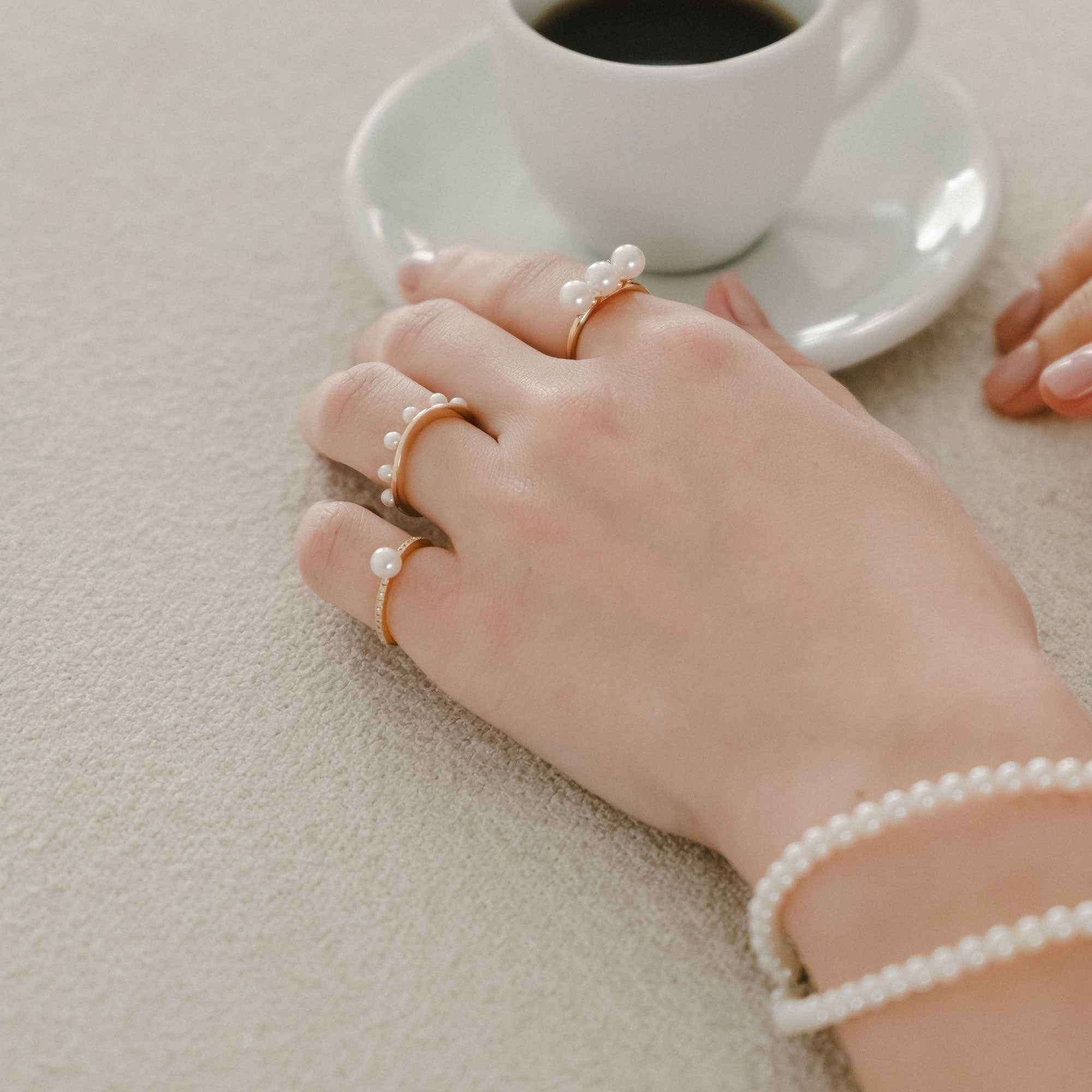
Mabé Pearl Ring: Character on the Hand
A ring is where you feel a mabé pearl's dimension most. The dome faces up, catches the eye, and carries an outfit on its own.
A plain band lets the luster do the work; gold or diamonds make it more of an occasion. For daily wear, don't stack too many rings around it. Let the mabé pearl lead.
Rings meet more surfaces than earrings or a pendant do, so mind knocks and abrasion while you're wearing one. Worth a look if you want a mabé piece with some individuality.
What to Look for When Choosing a Mabé Pearl

When you're choosing a mabé pearl, look at five things: luster, color, shape, size, and how well the piece is made.
Luster is the gloss and depth you see when light hits the surface, and it matters more here than usual. A mabé pearl has a lot of front-facing area, so its luster drives the whole impression. Look for a surface with enough strength to reflect you and the light around you clearly.
Color runs past white into blue, green, pink and gold, often layered together. Don't judge from one photo. Consider how the color shifts with the angle, and how it sits against the metal.
Shape includes the clean round dome, but also ovals and teardrops. For earrings, check the balance between the pair; for a pendant, how it reads at the neckline; for a ring, how the size works against your finger.
It's worth saying that a mabé pearl isn't worth less because it's a half dome. Value and price depend on size, yes, but also on luster, the state of the nacre and the surface, the beauty of the color, the shape, how well a pair matches, the metal and stones it's set with, and how carefully it's finished. Judge the whole piece, not just how big it looks.
Why Choose a Mabé Pearl from WSP
WSP has worked with pearls in Japan for more than 30 years. That experience goes into checking each pearl individually for luster, color and surface, so what we carry is a pearl that works as jewelry.
Two mabé pearls with the same color name still won't look identical. Our pieces include a soft Aurora White, and an Aurora Blue that centers on blue with green and pink playing through it, chosen to make the most of what a mabé pearl can do.
WSP Global ships mabé pearl jewelry from Japan worldwide: earrings, pendants and rings. International shipping is tracked, which helps if you're shopping for Japanese pearl jewelry from abroad.
If you'd rather compare color and design as well as pearl type before settling on one piece you'll wear for years, take a look at WSP's mabé pearl collection.
In Short: Why a Mabé Pearl Might Suit You
A mabé pearl gets its half-dome shape from growing against the inside of the shell. The back is flat, the front carries one broad, glossy dome, and that suits jewelry meant to be seen head-on: earrings, pendants, rings.
It has a presence round pearls don't, and it keeps the soft luster that makes a pearl a pearl, so it moves between formal occasions and ordinary days without much effort.
Choose by how you'll use it. Mabé pearl earrings to brighten the face, a mabé pearl pendant as a gift, a mabé pearl ring for character on the hand.
WSP Global carries mabé pearl jewelry selected with a Japanese pearl specialist's eye. Compare colors, shapes and designs, and find the mabé pearl that's right for you.

