



Pearl Colors: How to Choose the Shade That's You

Most people picture pearls as white. But pearls actually come in a whole spectrum of colors, from soft pink to deep gold.
That's exactly why we think you should choose by outfit, mood, or whatever feels right that day. Even on a slightly gray morning, putting on your favorite colored pearl can lift your spirits without you even trying.
So go ahead and start with whichever color catches your eye.
How Do Pearls Get Their Color?
A pearl's color comes down to the type of oyster that made it. Nacre, the lustrous layer that forms a pearl, is built from calcium crystals, and the pigments in the proteins between those crystals are what give a pearl its color. South Sea pearls, for example, tend to pick up the color of the nacre lining the inside of the oyster's shell.
Two things combine to create that color: body color, the hue built into the pearl itself, and the aurora effect, the shimmer that rises to the surface as light moves across it. Together, they create something delicate and layered.
Some pearls come by their color naturally. Others are treated or dyed to become the colored pearls you see in jewelry today.
Natural Color, or Dyed?

Pearls aren't ready for jewelry the moment they come out of the shell. Starting with the Akoya oyster, every pearl goes through a series of steps before it's ready to wear.
Processing varies by pearl type. Many South Sea and Tahitian pearls keep their natural color as they're found, while most Akoya pearls go through a process called color toning to bring out their best look. Some pearls also get their color from dyeing or radiation treatment, all in the name of making them even more beautiful.
You might wonder if dyed pearls will fade or rub off. Processing techniques have come a long way, and today's results can be genuinely beautiful. The dyed pearls we carry won't transfer color onto your clothes, so you can wear them without a second thought.
One more thing worth knowing: whether a pearl's color is natural or dyed, it can soften slightly with time. That's simply part of how pearls age, and it's worth enjoying as one more thing that makes colored pearls special.
Choose Your Pearl by Color
With so many colors to choose from, the easiest place to start is with a color you already love, or one that fits right into your wardrobe. Go ahead and check out your favorite below.
Pink and Orange Tones

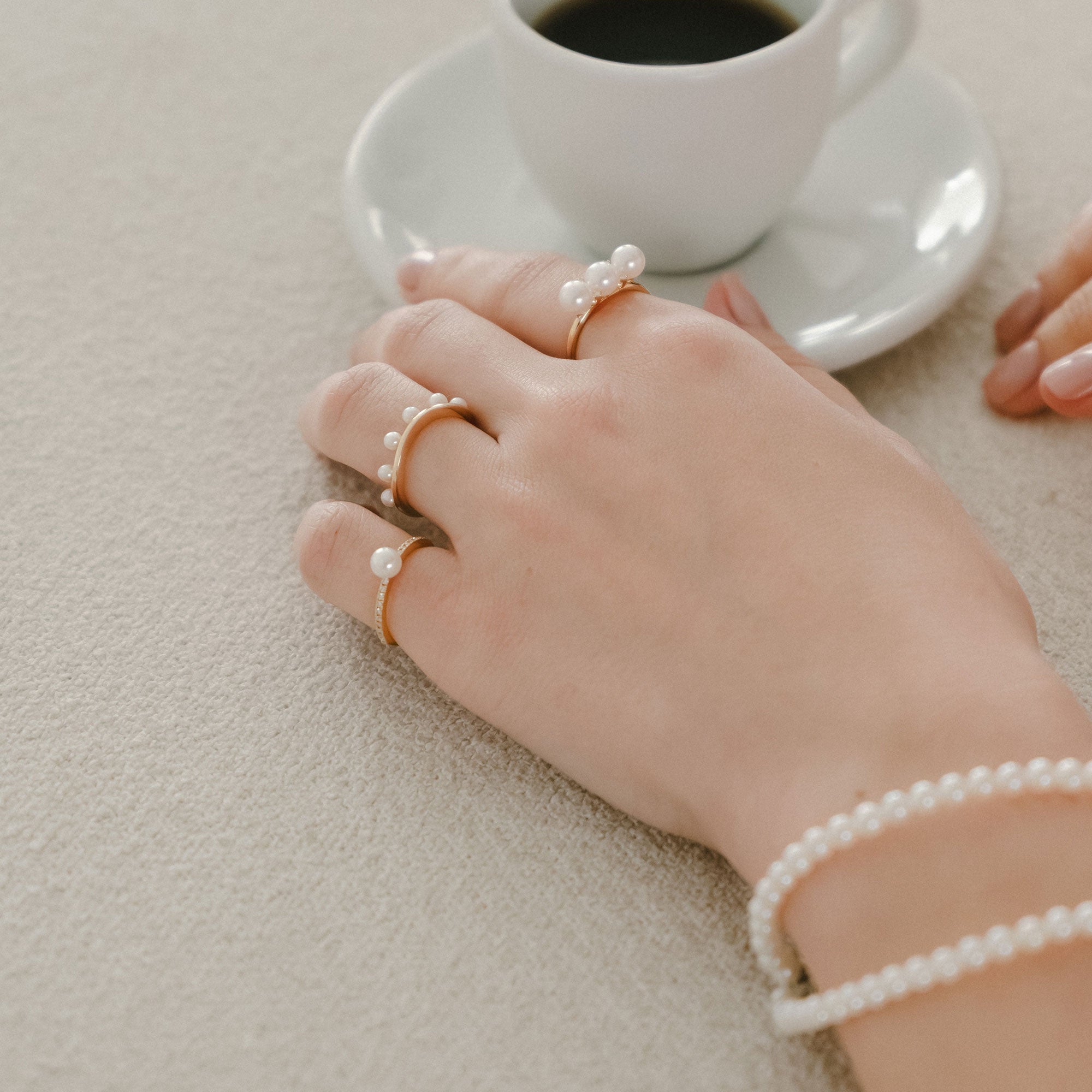
Pink pearls have a bright, playful energy, and these are all freshwater pearls. The shade runs from purple-leaning pink to orange-leaning pink, so there's real range here. If you lean cool-toned or dress on the sleeker side, the purple pinks tend to suit you. Warmer skin tones, casual styles, or anyone who likes a little more flash will probably gravitate toward the orange pinks.
Either way, pink pearls add an instantly pretty, lively touch. They're a favorite whether your style leans feminine, elegant, or anywhere in between.
Blue and Gray Tones
 Akoya pearls are the popular choice for blue and gray tones. Tahitian pearls can also show up in shades close to gray or silver.
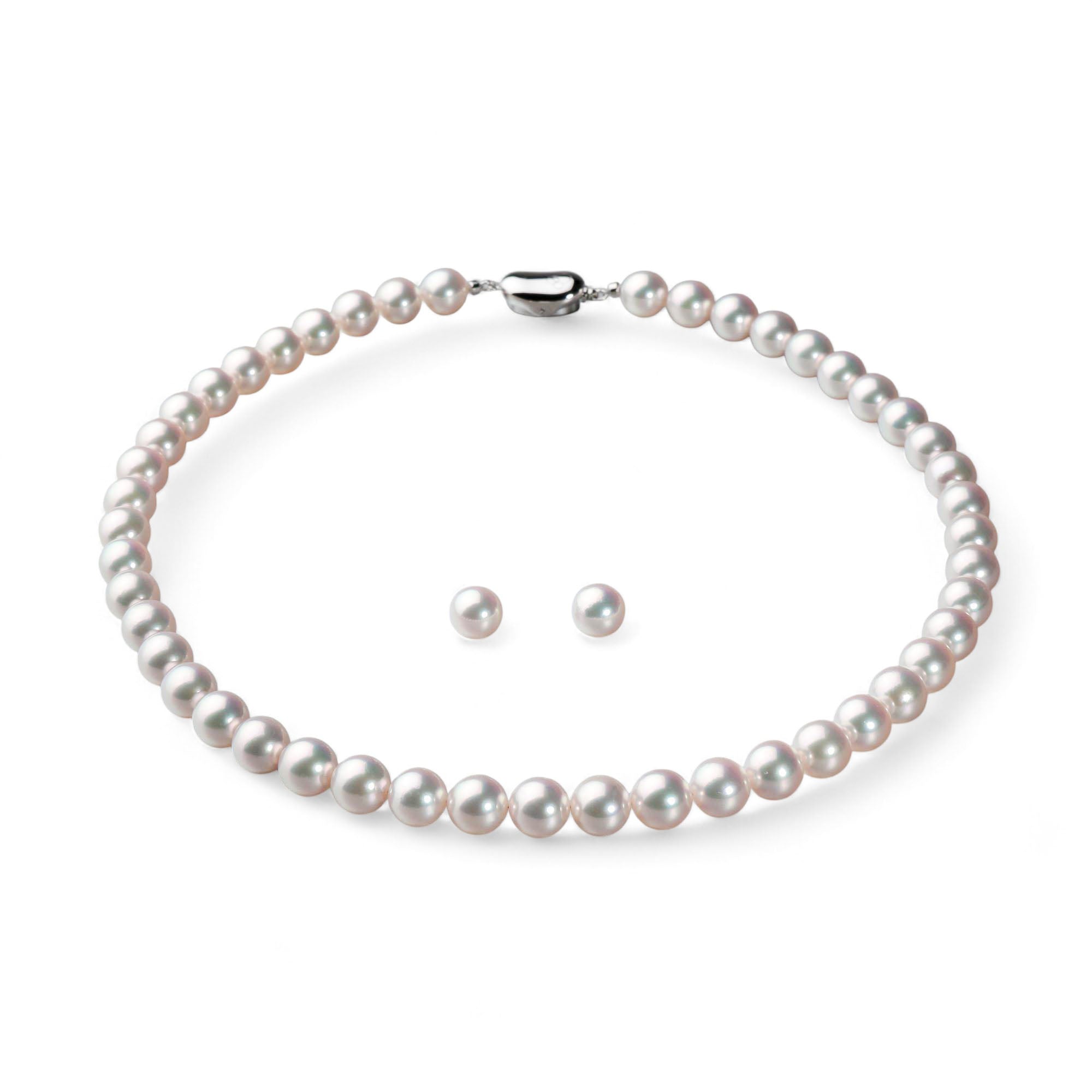
Akoya pearls come in both natural color and a treated version known as cobalt (radiation) treatment, and honestly, the two are almost impossible to tell apart. The necklace pictured above, for instance, is cobalt gray, while the baroque pearls are natural gray. Radiation treatment works by irradiating the pearl's nucleus to shift its color. It's the same kind of radiation used in sterilization, and it's harmless to the body, so there's nothing to worry about there. Cobalt-treated pearls also tend to hold their color well over time.
Gray and blue-gray pearls are popular because they go with nearly everything. Pair them with denim for a casual look, a sleek monochrome outfit, or even soft pastels. They're a genuinely versatile color that works with whatever you're wearing.
Shop All Blue and Gray Pearls >

Green is one of the popular colors for black pearls worn at condolence occasions. Tahitian pearls are the main source of that green tint, though some Akoya pearls are dyed green too. Tahitian pearls in particular are a favorite here: when the aurora effect leans reddish, the color can look almost like a peacock's feathers, which is why it's known simply as peacock.
Natural colors range from deep and rich to soft and pale, so the impression shifts with the shade. Green pearls have long been a favorite among women with an edgier, casual style, and more recently, they've become an easy pick for men too.
Then there's pistachio, a genuinely rare color that few places carry. This muted, nuanced green comes from a special dyeing process. It reads softer and fresher than a straight green, making it a rare colored pearl that pairs especially well with natural, laid-back outfits.

Gold and brown pearls are made for fall and winter outfits. Gold pearls come from the South Sea oyster, often called the queen of pearls, and their rich, warm color is what makes them stand out. Gold ranges widely too, from a soft, pale light gold to a deep, glossy gold.
Smaller sizes work beautifully with natural, casual style. Larger sizes lean gorgeous and elegant, and make an even bigger statement.
Brown pearls pair naturally with gold, and they're often called chocolate pearls. That rich, chocolate-like color comes from a special dyeing process, the same as pistachio. It's a basic, easy color that works with almost anything in your closet.
Chocolate pearls keep a touch of sweetness while still pulling an outfit together. If your wardrobe leans toward brown, beige, or navy, these are an easy, natural fit.
So, what did you think? There's something genuinely joyful about colored pearls. Even just looking at them can turn your day around. Wear your favorite, sure, but don't overlook the quieter pleasure of setting a few side by side and watching how the light shifts across each one.
At WSP, you'll find more colors and variations than you'll come across anywhere else, hand-selected the way we've been doing it for over 30 years. Pick up whichever one catches your eye first. There's no wrong color, and no special occasion required.
Once you start noticing all the colors, it's hard to stop.


